
Your Next 500 Websites Shouldn't Mean 500 Times the Work
How Tymbrel is helping multi-location and multi-brand organizations rethink website management, reduce operational complexity, and build digital infrastructure that scales.
Growth is good for business. But for organizations managing dozens, hundreds, or even thousands of locations, growth can introduce a level of digital complexity that traditional website management systems were never designed to handle. Every new location brings another set of pages, another collection of local information, another layer of brand requirements, and another website that needs to remain secure, accurate, accessible, and optimized for performance.
Multiply that across an enterprise network and something that should be relatively simple, like updating a promotional message or implementing a new compliance requirement, can become an expensive, resource-intensive exercise. At delta4, we believe the problem isn't the number of websites. It's the architecture underneath them.
That's why we've built Tymbrel, our proprietary web management platform, to support organizations that need more from their digital infrastructure than the ability to publish and edit content. They need a smarter way to operate at scale, with technology that supports their growth rather than creating additional work every time the organization expands.
The Hidden Cost of Digital Growth
Most organizations don't start with 500 websites. They start with one, then five, then twenty. They acquire businesses, expand into new markets, launch additional brands, and gradually build a network of digital properties. Often, the technology that supported the first few websites remains in place long after the organization has outgrown it.
The result is a fragmented digital ecosystem where similar websites operate independently, common changes are repeated across multiple properties, and maintaining consistency becomes increasingly difficult. What once felt manageable becomes an increasingly complex operation, with internal teams spending more time coordinating updates and maintaining systems than improving the digital experience.
Consider a healthcare organization managing hundreds of clinics. A change to its booking experience, privacy messaging, analytics configuration, or navigation structure might need to be implemented across every website in the network. In a traditional site-by-site model, the work can multiply with every location. The organization isn't necessarily paying for hundreds of unique improvements. It's paying to repeat the same improvement hundreds of times.
This is where the economics of traditional website management begin to break down. As the network expands, so does the operational burden, often without a corresponding increase in value. True scalability requires breaking that relationship between network growth and operational effort.
One System. Hundreds of Websites. Greater Control.
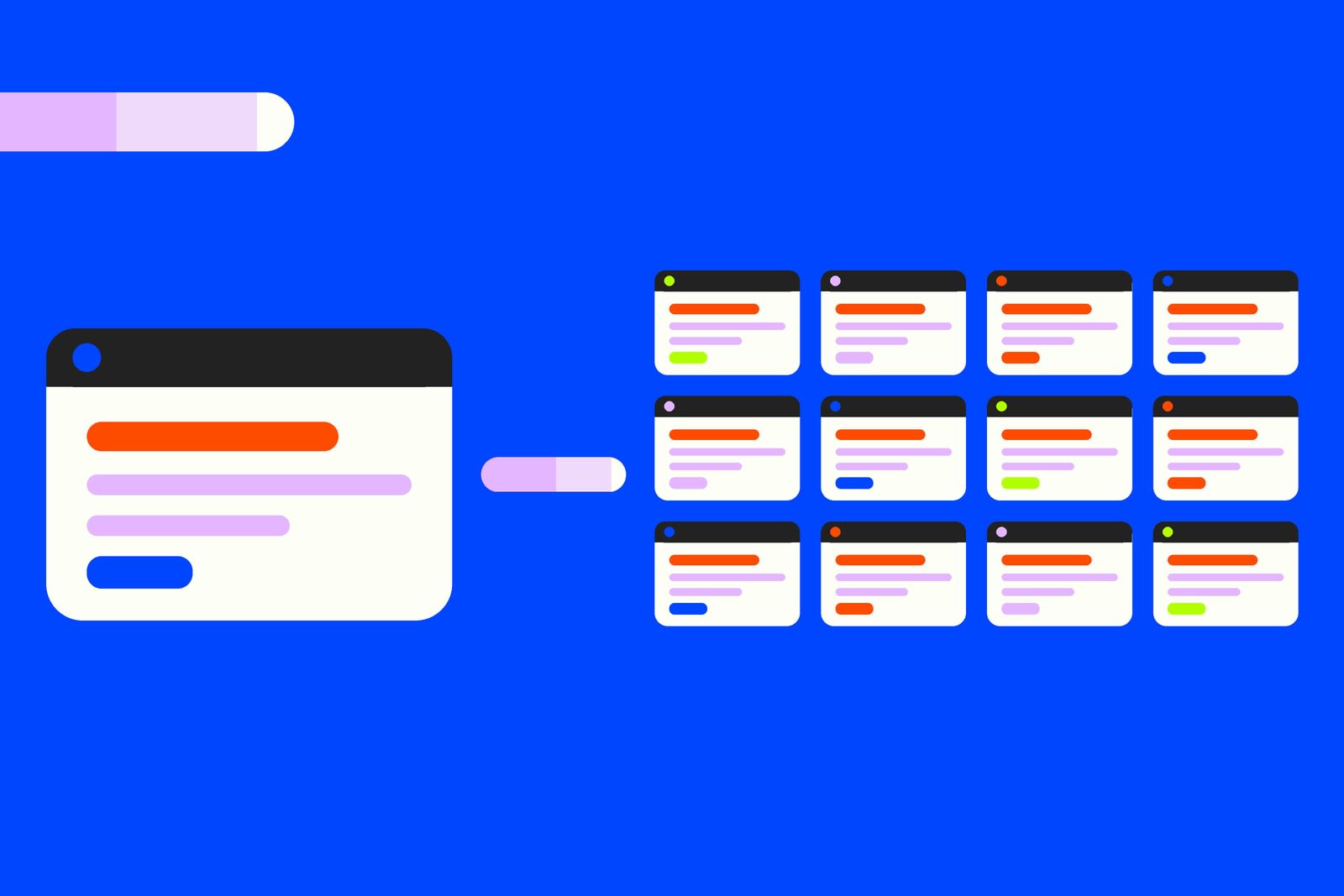
Tymbrel approaches enterprise website management differently. Rather than treating every website as a completely independent property, we design scalable systems that allow organizations to share the elements that should remain consistent while preserving the flexibility required for individual brands, markets, and locations. This approach creates an opportunity to centralize design architecture, streamline deployment, and establish clearer governance across an entire digital network.
Imagine an organization operating 300 locations across several brands. Each location needs its own identity, contact information, services, local search presence, and unique content. But those websites also share a significant amount of underlying structure. Their navigation patterns, design components, technical integrations, compliance requirements, and performance standards may be remarkably similar.
By building on a shared foundation, the organization can manage those common elements more efficiently instead of recreating and maintaining them independently. A single improvement to shared design code can become available across every website using that design. New functionality can be introduced systematically, and updates can be tested against a consistent architecture rather than hundreds of unrelated implementations.
The benefits extend well beyond development efficiency. Centralized systems create opportunities for stronger brand consistency, better technical oversight, and more predictable operating costs. They also make it easier for organizations to understand the digital infrastructure they own, how its different components relate to one another, and where future investment will have the greatest impact.
This is where web management begins to function as an enterprise operating system rather than a collection of individual websites.
Centralized Governance Without Sacrificing Local Identity
One of the biggest challenges for multi-brand organizations is finding the balance between centralized control and local relevance. Too much centralization can make every location feel identical, stripping away the character and community connection that make individual brands successful. Too little centralization creates inconsistent experiences, duplicated work, and unnecessary risk. We believe the right approach makes room for both.
A well-structured website network can organize information and functionality across several levels, from enterprise-wide requirements and market-specific needs to individual brands, locations, and unique page content. This means a national organization can establish consistent technical standards and brand requirements while allowing local teams to maintain the information that matters to their customers.
A dental practice in Vancouver doesn't need identical content to a practice in Miami. A regional healthcare brand may have different service offerings, regulatory obligations, and patient expectations from another brand in the same network. The system should accommodate those differences without requiring an entirely separate technical foundation for every website.
This distinction is particularly important for organizations growing through acquisition. The value of an acquired brand often includes its established reputation, local relationships, and market recognition. A centralized digital strategy shouldn't require an organization to sacrifice those assets in pursuit of operational efficiency. Instead, it should provide the underlying infrastructure that allows individual brands to thrive within a more connected enterprise.
With the right architecture, central teams gain greater oversight while individual locations retain the flexibility to remain relevant in their own markets. Standardization becomes a way to create more freedom, not eliminate it.
The Economics of Making One Change Instead of Hundreds
The financial impact of this approach can be significant. In a recent enterprise network modernization exercise, our team evaluated the cost of implementing the same set of website improvements through two different delivery models. The first followed a traditional approach, with changes deployed individually across a large network of websites. The second modeled the same improvements through centralized design architecture.
The estimated difference was substantial. The traditional delivery model carried an estimated implementation cost of approximately $101,000. Under the proposed centralized model, the equivalent work was estimated at approximately $37,000. That's a potential reduction of roughly 63% for the same network-wide improvement.
While those figures represent a specific modeled scenario rather than a universal savings guarantee, they illustrate an important principle: the architecture of a website network has a direct impact on the economics of operating it. Organizations often focus on the cost of hosting, licensing, or individual development requests without fully considering the long-term operational consequences of the system supporting those activities.
The opportunity isn't limited to reducing the cost of individual updates. It's about changing how an organization allocates its digital investment. When teams spend less time repeating routine work, they can direct more resources toward meaningful improvements, including better user experiences, stronger search performance, improved conversion opportunities, and new functionality that supports business growth.
The goal isn't simply to spend less on websites. It's to get more from every dollar invested in them, while creating an infrastructure that becomes increasingly efficient as the organization grows.
Digital Governance Is a Business Requirement
For enterprise organizations, web management is about more than marketing efficiency. It's also about accountability, particularly when digital properties operate across multiple brands, regions, or regulatory jurisdictions. Organizations need confidence that the right information is appearing in the right places, that technical standards are being maintained, and that changes can be introduced without creating inconsistencies across the network.
A healthcare network may need to update privacy language in one jurisdiction without affecting websites in another. A national organization may need to deploy a new campaign to a specific group of locations. A consolidator may need to understand which brands are using particular versions of a feature or design. These requirements become difficult to manage when each website operates independently and teams lack a clear view of how changes are being implemented.
A centralized architecture creates the foundation for more structured governance, with clearer relationships between shared elements and local content. It also opens the door to more sophisticated network-level management capabilities, including bulk content updates, targeted deployments, and parent-child page structures that allow common content to be managed centrally while preserving local customization.
These are the kinds of capabilities we're continuing to advance through Tymbrel's enterprise development roadmap. Our focus is on giving organizations greater control over how content, functionality, and design are distributed throughout their digital ecosystems, while reducing the manual effort required to manage them.
Ultimately, good governance should make digital operations easier, not introduce unnecessary bureaucracy. When the right systems are in place, organizations can move faster because they have greater confidence in the consistency, accuracy, and reliability of their digital infrastructure.
Built for Performance, Not Platform Bloat
Scalability shouldn't come at the expense of performance. As website networks become more complex, it's tempting to solve every new requirement by introducing another plugin, integration, or layer of software. Over time, that approach can create technical debt, increase maintenance requirements, and compromise the speed and reliability of the digital experience.
Our philosophy with Tymbrel has always been different. We believe enterprise-grade functionality and a lean technical foundation should coexist, and that a sophisticated platform doesn't need to become unnecessarily complicated to deliver meaningful capabilities. That means prioritizing efficient code, practical content management, strong performance, and the flexibility to integrate the tools an organization actually needs.
It's also why we approach search visibility, analytics, and technical performance as considerations within the architecture itself, rather than isolated activities added after a website launches. With search engines and AI-powered discovery systems placing increasing importance on accessible, well-structured information, the technical foundation of a website plays an important role in how effectively its content can be discovered and understood.
For organizations managing large networks, these decisions compound. An improvement to a shared technical component has the potential to benefit many websites, while a poorly considered architectural decision can create challenges across the same network. At scale, technical discipline becomes a competitive advantage, and the ability to maintain performance consistently across hundreds of digital properties is just as important as the performance of any individual website.
Built for Organizations That Are Still Growing
Multi-location healthcare groups, franchise networks, enterprise consolidators, education systems, and organizations operating multiple consumer brands share a common challenge. They need to deliver relevant digital experiences across a growing number of properties without allowing the complexity of managing those properties to overwhelm their teams. Increasingly, they also need to do it with greater financial accountability and a clearer understanding of the value their digital investments are creating.
The answer isn't necessarily more people, more software, or more individual websites. It's a more intentional approach to the infrastructure connecting them. When organizations begin thinking about their websites as a coordinated system rather than a series of independent projects, they create opportunities to improve everything from operational efficiency and brand governance to performance, reporting, and long-term adaptability.
Tymbrel gives us the foundation to design web management systems around the realities of enterprise operations, while continuing to develop the centralized tools and governance capabilities these organizations need as they grow. Combined with delta4's expertise in strategy, design, development, and ongoing digital operations, it allows us to think beyond the immediate requirements of a website launch and build toward the needs of the organization several years down the road.
Because the question for a growing organization shouldn't be how it will manage another hundred websites. It should be how its existing digital infrastructure can make the next hundred easier to launch, operate, optimize, and improve.
Growth should create momentum, not maintenance. And the right platform makes all the difference.
Build a Website Network That Works as One
Managing multiple brands, locations, or digital properties? Let's talk about how delta4 and Tymbrel can help you simplify your digital operations and build a more scalable foundation for what's next.